
Decisions | 6 min read
Decision Fatigue Is a Leadership Problem, Not a Willpower Problem

The short version
Decision fatigue is the worn-down feeling that comes from making too many choices, and for leaders it’s rarely a willpower problem. It’s a structure problem. When every decision in a company runs through one person, that person runs low long before the day runs out. The answer is fewer decisions reaching your desk, made in the right order, by people you’ve built up to make them.
If you’ve ever ended a day unable to pick what to eat for dinner after making forty calls at work, you already know what this feels like. Let’s talk about why it happens to leaders and what to do about it.
What decision fatigue looks like in a leader
Nobody walks around saying “I have decision fatigue.” It shows up sideways. Watch for these:
- You put off decisions you’d have made in thirty seconds a year ago.
- You say yes just to end the conversation.
- You snap at a small question at four in the afternoon that you’d have handled fine at nine.
- You reopen decisions you already made, because you’re not sure anymore.
- Your team waits for you on things they could handle, and you let them.
- You feel busy all day and can’t name one big thing you moved.
None of these mean you’re a weak leader. They mean the load is set up wrong.
I’ve got a line for this. “You stop deciding. You start reacting.” That’s what decision fatigue does to a leader. You’re still in the chair, but the choices are making you, not the other way around.
Why willpower isn’t the answer
The common advice for decision fatigue is personal. Make big calls in the morning. Wear the same thing every day. Cut your options down. Some of that helps at the edges.
But think about a pipe that’s too small for the water running through it. You can clean that pipe every day, and it’ll still back up, because the real problem is how much you’re pushing through it.
For most owners and executives, the leader is the pipe. Every approval, every exception, every “quick question” goes through one person. Trying harder doesn’t make the pipe bigger. It just wears it out faster.
So the real question isn’t “how do I make better decisions when I’m tired?” It’s “why are so many decisions reaching me in the first place?”
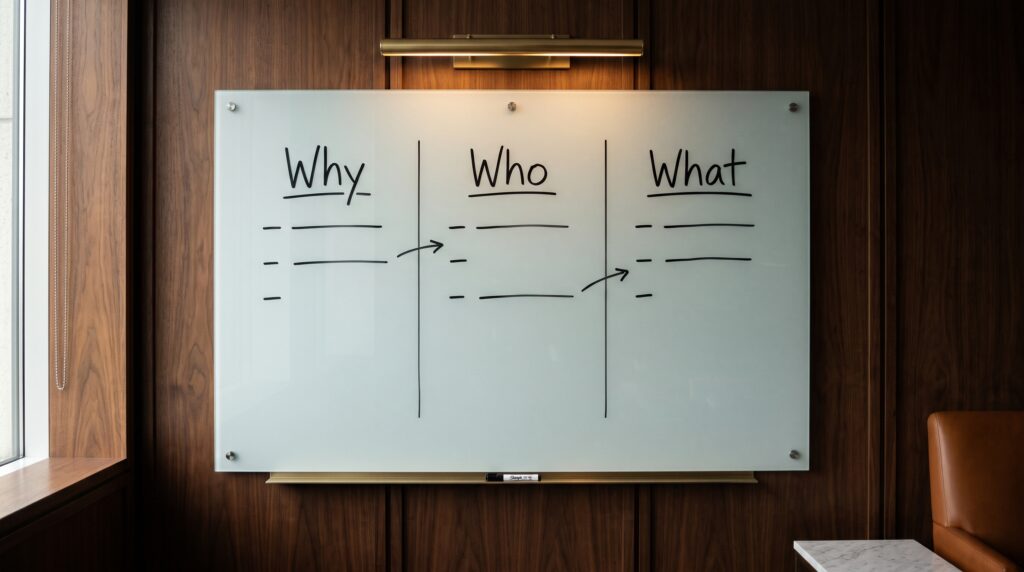
Why, then who, then what
Here’s how I think about it, in my own words:
The art is dialing it in and understanding the why. That leads to the who. And then we talk about the what.
Fred Smith
Most leaders run that backward. They start with the what: the task, the fire, the decision in front of them. They make it themselves because it’s faster. Then the next one comes, and the next, and by evening they’re empty.
Run it in order instead.
Start with the why
Before you decide anything, get clear on what you’re actually trying to do. What does the company stand for? What’s the standard? What would you never trade away, even for a sale?
When the why is clear and written down, a lot of decisions stop being decisions. They become lookups. “Does this fit the standard? No? Then we don’t do it.” Nobody needs to come to you for that.
Then the who
Once the why is clear, ask who should own each kind of decision: someone who’s ready, or close to ready.
This is where most leaders get stuck, because handing off feels risky. And it is risky if you do it wrong. You don’t hand someone a responsibility they can’t carry yet and call that generosity. You build them up to it. You show them how you’d think it through, you watch them try it, and you check they’ve got it before you step back.
One step at a time. Nobody moves on until they’ve got this step.
Then the what
Only now do you get to the task itself. And by now, a lot of it isn’t yours anymore. The what lands on the person who owns it, measured against a why everyone can read.
That’s how you get decision fatigue under control as a leader. Not by being tougher at five o’clock. By making sure five o’clock you isn’t holding forty decisions somebody else could make.
Rather watch than read? New videos go up on the Lead Your Power channel.
Trying harder doesn’t make the pipe bigger.
Why decision fatigue hits owners harder
An employee who’s tired at the end of the day can go home. The work waits, and someone else picks up the slack.
An owner doesn’t get that. The decisions follow you to dinner, to the weekend, to the middle of the night. There’s no shift change for the person whose name is on the door.
And owners usually built the company by being the one who decides. Early on, that was the right call. When there were five of you, fast decisions from the top kept the lights on.
The trouble is that the habit outlives the stage. The company grows to twenty, fifty, two hundred people, and the decisions still flow up to the same desk. The habit that built the company starts to choke it.
It’s a stage problem, and a common one. The leaders who handle it well are the ones who notice early and change how decisions move, before a tired call turns into an expensive one.
A quick note: decision fatigue as I’m using it here is a leadership and workload issue. If you’re exhausted in a way that sleep and a lighter week don’t touch, that’s worth a conversation with a doctor, not a coach.
A simple practice for this week
You don’t need a reorganization to start. Try this.
- Keep a decision log for three days. Every time someone brings you a choice, write it down in a few words. Don’t change anything yet. Just count.
- Sort the log. Mark each one: only I can make this, someone else could make this with a clear standard, or someone else could make this today.
- Write one standard. Take the most common type of decision on the list and write down how you’d make it, in plain words. That’s the start of a lookup instead of a meeting.
- Pick one person and one decision type. Build them up to it. Walk them through your thinking, let them make the next one while you watch, then let them own it.
- Protect your best hours. Put your real, only-I-can-make-this decisions where you’re sharpest. Everything else waits or goes to the person who owns it.
You may find that a good share of what lands on your desk didn’t need to. That’s just what happens when a company grows faster than its decision lines.
Decision fatigue is a signal, not a sentence
A lot of driven people carry this belief: “If I want it done right, I have to decide it myself.” It sounds like high standards. It’s actually a bottleneck with a good reputation.
If it only runs through you, you didn’t build a company. You built a very busy job.
The leaders who handle pressure well usually aren’t the ones with the most willpower. They’re the ones who did the boring work early. They wrote the standard down. They built up the people around them. They kept the hard decisions for themselves and gave away the rest.
Get clearer, not louder. Fix it early, while it’s a tired afternoon and not a bad call that costs you something you can’t get back.
Common questions
What is decision fatigue?
Decision fatigue is the worn-down feeling that comes from making too many choices, and for leaders it's rarely a willpower problem. It's a structure problem.
Can't I just push through it?
Trying harder doesn't make the pipe bigger. It just wears it out faster. So the real question isn't "how do I make better decisions when I'm tired?" It's "why are so many decisions reaching me in the first place?"
What can I try this week?
Keep a decision log for three days. Every time someone brings you a choice, write it down in a few words. Don't change anything yet. Just count.
Where to start
If you’re running on fumes and your calendar is full of choices that shouldn’t be yours, it’s worth one honest conversation about how the decisions in your company are set up.
That’s the work I do with owners and leaders. No pressure, and no promises about outcomes. We look at where the decisions go, why, and what you’d want to change.
Not ready? Start here or watch on YouTube.
Lead your power.

Why Success Feels Empty, and What It's Telling You as a Leader
Feel successful but empty? It's not ingratitude. It's a signal about how you've been building. Three causes and four steps to take this week.
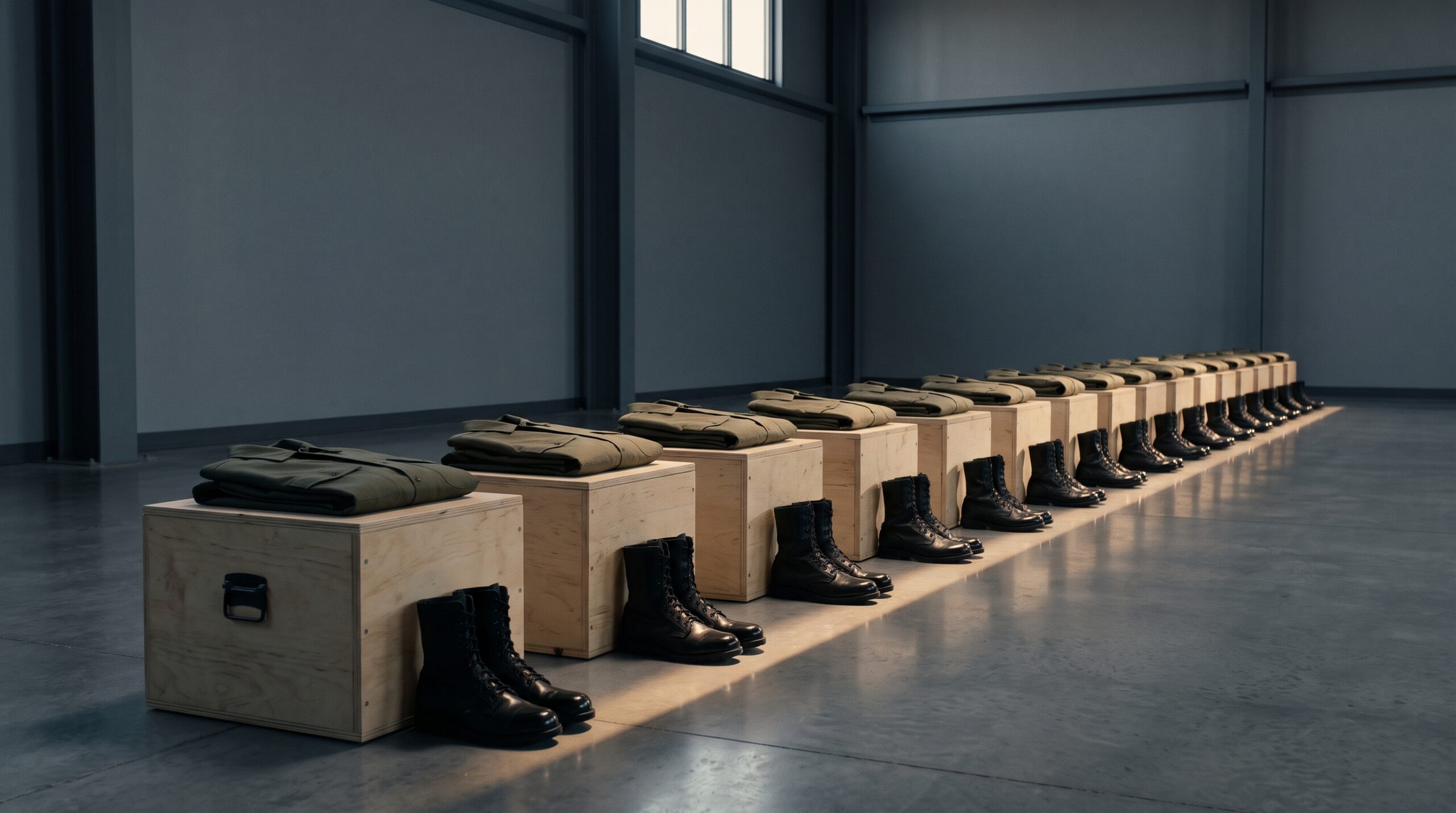
Stories: We Make Marines
What the Marine Corps taught me about leadership: a person can't be copied, a process can. That's how you make leaders.
Lonely at the Top Is a Communication Problem
Lonely at the top? It's rarely about who's around. It's the filter on every conversation. Signs it's on, and how leaders break it early.

Let someone fill your cup for a change
You’ve given so much, for so long, to so many people. You’re allowed to receive a little of it back.
The first step is small. Do a little homework on where you are, then pick fifteen minutes on the calendar.
Not ready to talk yet? That’s fine. Start here, with short reads sorted by what’s on your mind.